Thistlebridge
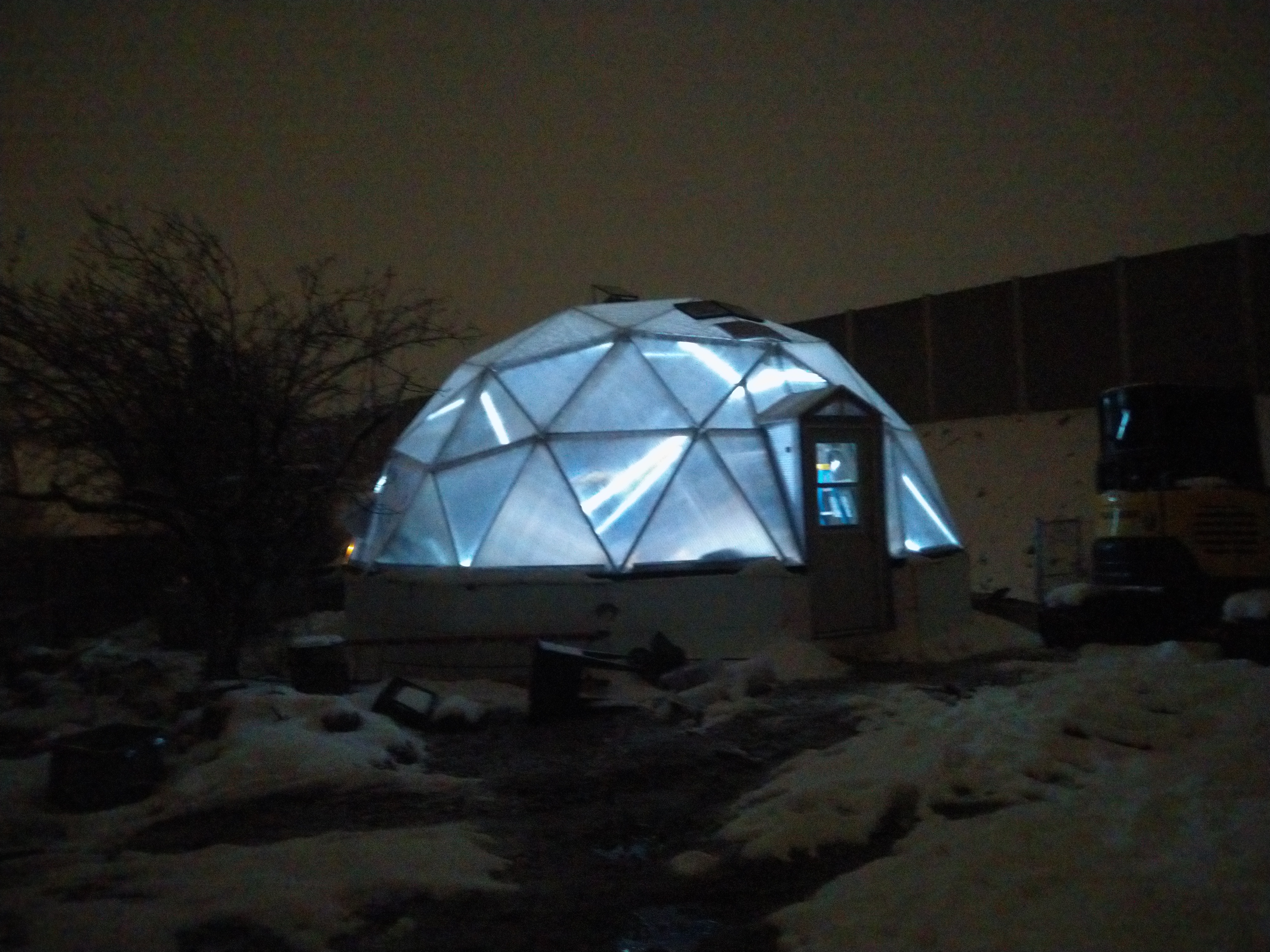
Thistlebridge is a small plant nursery in Taylorsville, Utah, growing out of a 26-foot geodesic dome greenhouse. We grow vegetable and herb starts, fragrant plants, and pollinator stock for neighbors and a few small retailers, by advance order and pickup.
The rest is home-office work: research and writing about what community-scale technology looks like when you build and run it yourself. That means AI that runs locally on owned hardware rather than as a subscription, networks that keep working when the internet doesn't, growing knowledge that compounds across seasons, and knowledge held in a commons we maintain. The aim is systems that make the people who use them more capable, not more dependent.
None of this needs an institution's budget. It does lean on a frontier AI subscription: Claude built much of it. That's a dependency I'd rather name than hide, and reducing it over time is part of the work. Tools that work at residential scale — on a modest budget, maintained by the people using them — are tools communities can actually build and keep running. The same infrastructure that helps manage a small dome greenhouse can help a neighborhood group, a community garden, a small farm. We document what we learn so others can adapt it.
Where the Work Stands
Running now. Plant starts go out each spring. Local language models run on owned hardware and are in daily use. There's a growing knowledge base and the Arboretum. A few quiet surfaces work too: e-ink panels, and a rotary phone that takes voice notes.
Early or stalled, said plainly. The mesh radio network has its first node up. Greenhouse sensing is still mostly on the bench. The tissue-culture bench is partly set up. The reports cover what broke as well as what worked.
Next major step: the integrated biology layer. Tissue culture, mycology, a seed library, and fermentation, braided into one working biology practice.
Longer horizon: Nymphaea. A formation network that helps other sites stand up their own version on their own terms in their own places. Each independent. Connected by mutual aid, not central control.
Where the Pattern Comes From
The institutional form Thistlebridge is reaching for is not new. It draws on lineages that have already worked, in other domains, in other eras:
- The Rural Electrification Administration — federal capital, community ownership, cooperatives that outlive the program that capitalized them.
- The Cooperative Extension Service — knowledge propagated by people on the ground in places, bidirectionally, held in a commons.
- The fab lab network — replication by standardized pattern and open curriculum, not franchise, with no central actor required to keep it alive.
- Highlander Folk School — formation by bringing practitioners into proximity with each other and with working examples, politically explicit, institutionally prepared for adversity.
The work Thistlebridge is doing is one attempt at the version of these traditions appropriate to this era — when the conditions that organized twentieth-century institutional life are visibly shifting, and the next generation of institutions has to be ready for either continuity or restructuring.
What's Here
Plant availability from the current growing season. Reports from what's being built and tested. Notes on community infrastructure and the tools that support it.
Questions? Try asking a Thistlebridge-specific Claude instance (an experiment, and it can be wrong).
Capability isn't a service you subscribe to. It's a practice communities grow together.